This is an edited version of an article that appeared in the WMSAIA Newsletter (vol. 12, no. 1, September 1998), in honor of the Society’s 50th anniversary.
Uncovering Our Foundation
In the fall of 1997, Diana Wolfe Larkin, then President of the Western Massachusetts Society (WMSAIA), initiated an archives project to aid in reconstructing the history of our Society. Our initial efforts to discover more about our early history were stymied by the limitations of our own archives which dated back only to the early 1960s, although we knew that our Society had been in existence much longer.
Our initial investigations brought us to 1947 as the year of our founding, which the AIA Bulletin corroborated, showing that WMSAIA was added to the ranks of regional societies in the 1947-1948 academic year. It also provided a list of the first officers as well as the Executive Council and the entire membership roll, which numbered 22. While this information was enlightening, adding names and personalities to our early history, the specific circumstances of our founding remained obscure. In other words, we had discovered “whodunit,” but not how or why.
Then, we found the “smoking gun” at the Amherst College Archives in the form of the files of Charles Morgan, whose name appeared in the Bulletin as an original member of our Executive Council; these files contained a veritable treasure trove of material pertaining to our Society, some of it dating back to our founding in 1947, including a letter which describes the organizational meeting that led to it. This letter reads:
“The undersigned take pleasure in announcing that a meeting for the organization of a branch [of the] Archaeological Institute of America, tentatively known as the Pioneer Valley Society, will be held in the Browsing Room, Smith College Library, Monday, October 27, at 8 P. M. Immediately following the meeting, Karl Lehmann of New York University will give an illustrated lecture on ‘Thomas Jefferson and Ancient Monuments’ at Graham Hall.
This note is being sent to all present members of the Institute in this area and to those who, we think, may be interested in the formation of a regional group. It is our understanding that all members of this newly formed Society will also automatically be members of the Boston Society without extra fee, receive notices of its meetings, and get the same old friendly welcome.
Hoping that you will find it possible to give us your encouragement and support at this initial meeting, we remain, Cordially yours, Lucy T. Shoe (Mount Holyoke College), Charles H. Morgan (Amherst College), and Vincent M. Scramuzza (Smith College).”
The AIA After WWII
We reached out to Professor Shoe to learn more about the part she played in the foundation of our Society. She reminded us that during the late 1930s to 1940s—when she was on the faculty at Mount Holyoke College—World War II had had a debilitating effect on activities in western Massachusetts. She recalls having no gasoline to “get over the mountain” or “across the river” (as she puts it), and that Charles Morgan was then serving in the Air Force. It took a few years after the war ended, with some people returning to the area and new ones arriving, before interest in the AIA began to grow. Professor Shoe was also a frequent visitor to Cambridge and Boston—in whose Society she was a member—whenever an especially interesting lecture was scheduled to take place.
Professor Shoe remembers with fondness her friendship with Sterling Dow and his energetic drive to increase the membership in the AIA, especially during his presidency of the Institute in 1947-1948. There was also some discussion of forming new societies, although she had to admit to not remembering anything in particular about the foundation of the WMSAIA. She nonetheless maintains that Sterling Dow was the chief moving spirit of the founding.
We have a report by Sterling Dow, dated April 27, 1946—about 18 months before he assumed the presidency of the AIA—that describes some of the difficulties facing the national organization in the post-war years:
“Due in part to the depression first and the war afterward, in part also (we fear) to the economies which the situation necessitated, there has been a long decline, a decline which has carried our total below 1,000 members. In itself the figure means little, and even the decline of membership income from $24,000 to $8,000 would be of small consequence if it were accompanied by a real gain in loyalty and interest on the part of those who remain.
The number of Societies has declined by over half. The number of members in the higher age brackets has become, as was inevitable, disproportionately high. It seems clear that we must revive old societies, found new societies, and increase membership…”
This puts Lucy Shoe’s reminiscences into a firmer context and corroborates her view that there were discussions of new societies and that the founding of our own Society came as a result of the membership drive initiated by Sterling Dow.
About the WMSAIA Founders
The success of our Society in its early years was due in no small measure to those involved in founding and nurturing it through its infancy. The driving force behind this effort were Vincent Scramuzza (Smith College), Lucy T. Shoe (Mount Holyoke College), Charles H. Morgan II (Amherst College), and Phyllis Williams Lehmann (Smith College).
It is evident that our Society came into existence through an act of cooperation among these three institutions in western Massachusetts. Hampshire College, of course, had not yet been founded and UMass Amherst was not much of a player at this time, since it lacked both a Classics Department and an Art History Department. Professor Shoe recalls the cooperation among the three institutions, which generally involved inviting interested members from each of the campuses to lectures. She remembers in particular working with Charles Morgan on matters relating to the American School of Classical Studies at Athens, as well as his efforts to build up the Mead Art Museum collection at Amherst College.
Vincent Scramuzza
Professor Scramuzza was born in 1886 in a small, mountain village in Sicily. He was originally educated for the priesthood in Palermo, but early on his interests took a scholarly turn. He joined his parents in New Orleans, which he regarded as his hometown throughout his life, when he was 21 years of age (1907), and received a Master’s Degree in History from Louisiana State University (1924), where he studied, among other subjects, American Colonial history. He went on to receive his Ph.D. in 1929, at the age of 43, from Harvard University, where his dissertation on the emperor Claudius, which he later published as a book, received the Tappan prize, awarded annually to the dissertation adjudged the best among those submitted in the arts and sciences. He taught history at Harvard and at Wellesley before landing a permanent position at Smith College in 1930.
Professor Scramuzza’s specialty was Greek and Roman history, but he also taught courses on American Colonial history as well as the history of the Christian church. He was promoted to Associate Professor in 1940 and to full Professor in 1943. His primary publications were an Economic Survey of Ancient Sicily (1937), published as part of a series edited by Tenney Frank, and his revised dissertation on Claudius (1940). His general survey of the Ancient World was published posthumously. Professor Scramuzza died in New Orleans on December 3, 1956, at the age of 70.
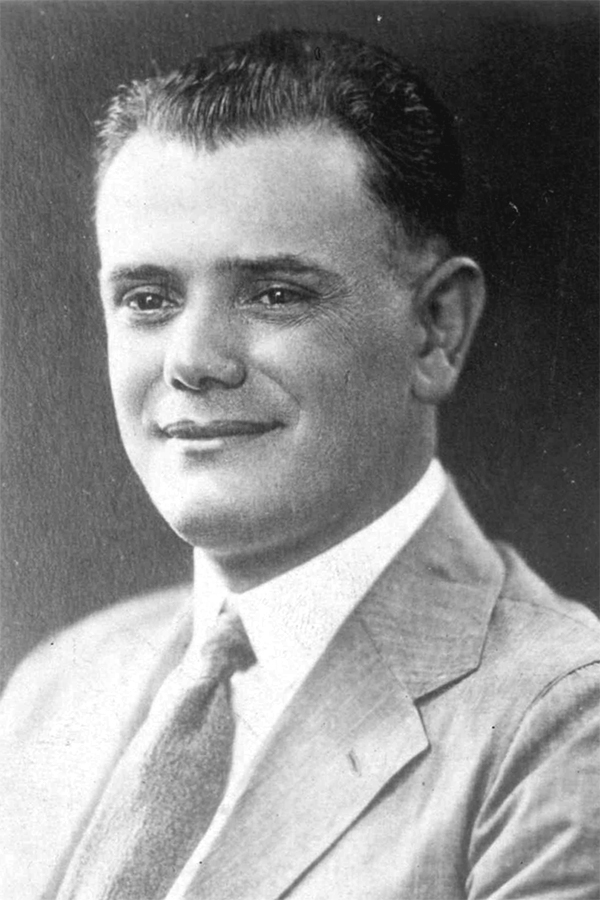
Lucy T. Shoe
Lucy Taxis Shoe, later known as Lucy Shoe Meritt, received her AB from Bryn Mawr College in 1927, her MA in 1928, and her Ph.D. in 1935. She arrived at Mount Holyoke College in the fall of 1937 as Assistant Professor in the Department of Art and Archaeology, as it was then known, and she was promoted to Associate Professor in 1942. During her time at Mount Holyoke, she was active in the Western Massachusetts Section of the Classical Association of New England, as well as the Archaeological Institute of America (AIA) and the American School of Classical Studies at Athens (ASCSA). Her main area of research at the time was Greek and Roman mouldings, which she later published in three separate volumes.
Professor Shoe left western Massachusetts in the spring of 1948, just a few months after helping to found our Society, for a fellowship at the Institute of Advanced Study in Princeton, and then a year later at the American Academy in Rome. She officially resigned her position at Mount Holyoke when she was named Editor of the publications of the ASCSA, a post she held from 1950 to 1973. She went on to serve the rest of her career as a Visiting Professor at the University of Texas. Professor Shoe received an honorary degree from Brown University in 1974. Her book, History of the American School of Classical Studies at Athens, 1939-1980, appeared in 1984, and an expanded version of her book Etruscan and Republican Roman Mouldings in 2000. Being named the “Outstanding Woman of Texas” by the Austin Branch of the AAUW (1977) and receiving the the AIA’s Gold Medal Award for Distinguished Archaeological Achievement (1977) are two of the many honors that mark her long and illustrious career. Professor Shoe died in Austin in 2003, at the age of 96.
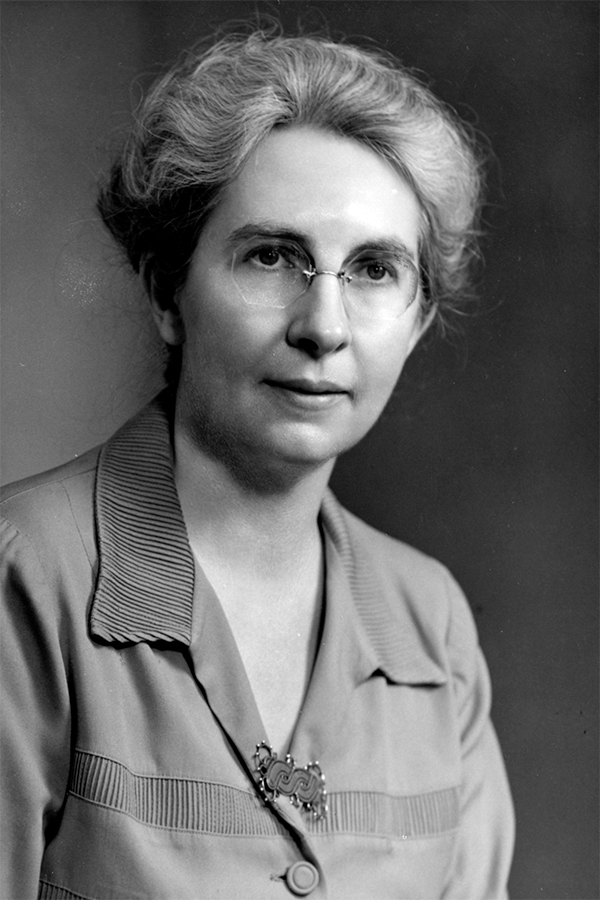
Charles Hill Morgan II
Charles Hill Morgan II was born in Worcester, MA, on September 19, 1902. He was described in the following way in a tribute at his death:
“An artist at heart to whom beauty of line, mass, color, and sound from every age and area, man-made or in nature were the bread of life, he early elected to concentrate his professional career on the study and teaching of the history of art with special emphasis at first on ancient Greek monuments, notably sculpture.”
Professor Morgan came to Amherst College in 1930, as the first appointment in the Department of Fine Arts, after receiving his Ph.D. from Harvard University and teaching at Bryn Mawr College for one year. He was promoted to Associate Professor in 1934 and Full Professor in 1938. Professor Shoe describes his life as a two-fold dedication: first, devoted to the rebuilding of the American School of Classical Studies at Athens (ASCSA), especially after WWII, and second, to the construction of Mead Art Museum at Amherst and expansion of the art collection there, which he accomplished almost single-handedly. The results of the latter endeavor he published in a book after his retirement from active teaching.
Perhaps his first and greatest love was the ASCSA, where he was a student in the late 1920s and director from 1936 to 1938, as well as Field Director of the Corinth Excavations. Under his chairmanship of the Managing Committee, he helped see to fruition such projects as the excavations of the Athenian Agora (and their subsequent publication) and the reconstruction of the Stoa of Attalos. His list of publications, in addition to his book on the Amherst College art collection, is long and impressive: Ancient Corinth: A Guide to the Museum; The Byzantine Pottery of Corinth; George Bellows, Painter of America; and Life of Michelangelo. He headed the Art Department at Trinity College from 1964 to 1966. He retired in 1968 after 38 years at Amherst College, and he died in December 1984.
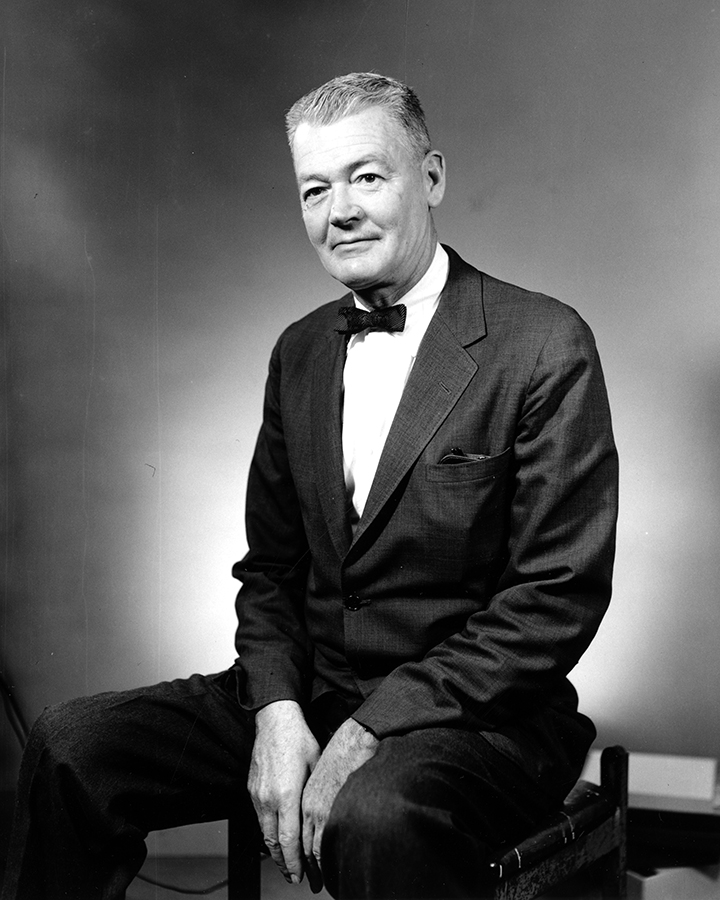
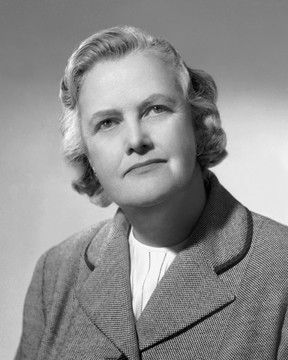
Phyllis Williams Lehmann
In addition to our three founders, Phyllis Williams Lehmann, whom we now honor with the annual Lehmann Lecture, was also on the scene. Professor Lehmann was on the original roster of the Society, served a term as President in the 1950s, and is the only individual to have been a member during the entire first half-century of the Society’s existence.
Professor Lehmann earned her PhD from the Institute of Fine Arts in 1943 and began teaching as an Assistant Professor in the Art Department at Smith College in 1946. She was known for delivering riveting lectures and was described as an “extraordinarily intelligent, wise, and gracious but formidable presence.” 4 Her research interests spanned antiquity to the twentieth century, but Samothrace was always at the heart of her research—she served as the Advisory Director of the excavations in Samothrace for many years and was named an honorary citizen of Samothrace in 1968. Her book Samothrace III: The Hieron (1969) was awarded the Alice Davis Hitchcock Award from the Society of Architectural Historians. Professor Lehmann served as the Dean of Smith College from 1965 until her retirement in 1970. She died in September 2004.
Looking Ahead
Those who came together in October 1947 to form this Society and who sustained it through its sometimes rocky early years were all interested in the past and its preservation: they were historians, classicists (philologists), art historians as well as archaeologists. Their interests ranged chronologically from ancient to modern and geographically from the Old World to the New. It is my hope, as our Society looks forward to the next 50 years of its existence and beyond, that we can continue this tradition of active cooperation among the variety of disciplines in Western Massachusetts, both academics and non-academics alike, that we continue to attract to our ranks those who are interested in the preservation of the past, and that the membership as a whole will work together to preserve the legacy of the founders of our Society.
Geoffrey S. Sumi
Assistant Professor, Mount Holyoke College
Editor, WMSAIA Newsletter
(Special thanks to Diana Wolfe Larkin, Elizabeth Lyding Will, Rebecca Sinos, Jane Barlow, and Lucy Shoe Meritt)
- Vincent M. Scramuzza, College Archives, SC-MS-01008, Smith College Special Collections, Northampton, MA. https://findingaids.smith.edu/repositories/4/digital_objects/8126. Accessed October 1, 2025. ↩︎
- Lucy T. Shoe Faculty Biographical File, Archives and Special Collections, Mount Holyoke College, South Hadley, MA. ↩︎
- Charles Morgan Biographical File, Archives and Special Collections, Amherst College, Amherst, MA. ↩︎
- Krinsky, Carol Herselle, “Phyllis Williams Lehmann: 1912–2004,” Institute of Fine Arts Alumni Newsletter, 2005, p. 21. https://www.ifa.nyu.edu/assets/pdfs/alumni_newsletter2005.pdf. Accessed October 1, 2025. ↩︎
- Phyllis Williams Lehmann, Wikipedia. https://en.wikipedia.org/wiki/File:Phyllis_Williams_Lehmann.jpg. Accessed October 1, 2025. ↩︎
 Western Massachusetts Society of the AIA
